Welcome, Home!

Stripes of Solidarity is a patient-powered movement. This space uplifts the voices that are too often left out of the conversation. Through storytelling, resource-sharing, and community-building, Stripes of Solidarity bridges the gaps between rare disease, equity, and identity. Whether you’re a patient, ally, policymaker, or professional, you’re invited to join the call for more inclusive, informed, and compassionate advocacy.

Happy Holidays!

As we wrap up our first year of Stripes of Solidarity, we are deeply grateful for every story shared, every connection made, and every moment of strength that this rare community has shown.


December brings celebration, remembrance, and reflection. From World AIDS Day (Dec 1), honoring the fight for justice and care, to Pansexual Pride Day (Dec 8) and the Day of Remembrance of Homosexuals in Ukraine (Dec 12), we recognize the resilience, history, and beauty of the 2SLGBTQIA+ community worldwide.


We know the holidays are not one-size-fits-all. For many rare disease patients, caregivers, and queer individuals, this season can be filled with mixed emotions.


Joy, excitement, and worry: Will symptoms flare? Will there be sensory-friendly or accessible spaces? Will treatment schedules or immune concerns change plans?


Tradition, nostalgia, and grief: Holidays can highlight what has changed: new diagnoses, mobility limitations, missing someone you love, or wishing for the ease you once had.


Love, belonging, and strained family dynamics: Some face misgendering, rejection, or pressure to conceal their identity, while others build new joy with chosen family.


Community, support, and exhaustion: Daily medical care doesn’t pause for festivities. Caregivers can feel overwhelmed, stretched thin, or isolated.


Boundary-setting, flexibility, and empathy become powerful acts of love this time of year. Sometimes the greatest gifts are:

  • Plans that adapt to health needs
  • Help that’s specific and actionable
  • Traditions that evolve with us
  • Gifts that meet accessibility or sensory needs
  • Space to say “no” or “not today” without guilt


For those navigating the tension between celebration and struggle, we see you. We honor you. You belong here. If your holidays look different this year, quieter, slower, or held together with courage, that is valid. There is no wrong way to show up for yourself.


Your presence in this world is already a gift.


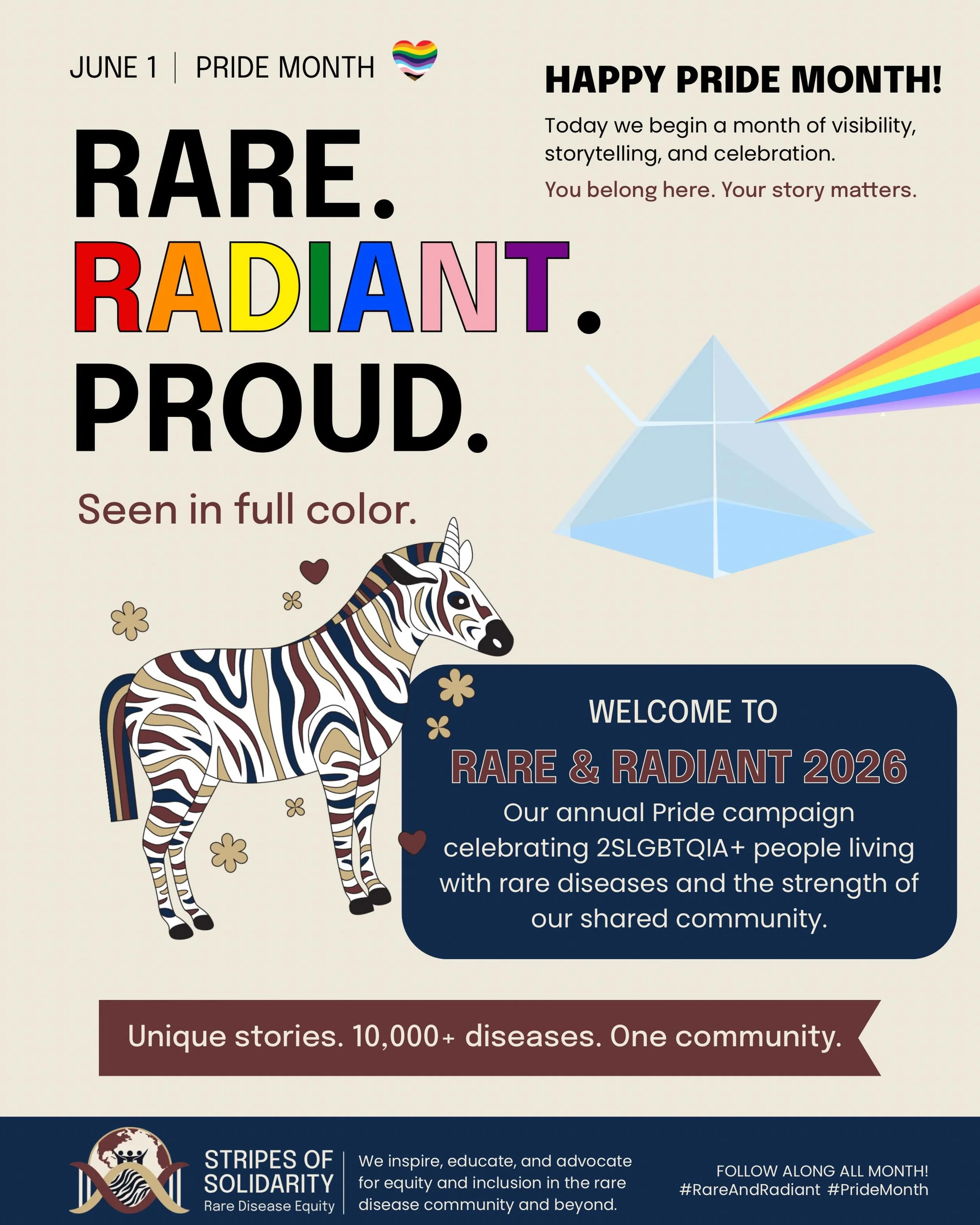
As we look toward 2026, Stripes of Solidarity remains committed to advocacy rooted in intersectionality and care, improving access, uplifting equity, and amplifying the rare voices too often overlooked.


We are grateful for you, today and every special, complicated day ahead.


From our SOS family to yours, however it is formed, Happy Holidays. May you find moments of peace, warmth, and connection. We’re in this together.

Rare Disease 101: The Basics You Need to Know

What Is a Rare Disease?

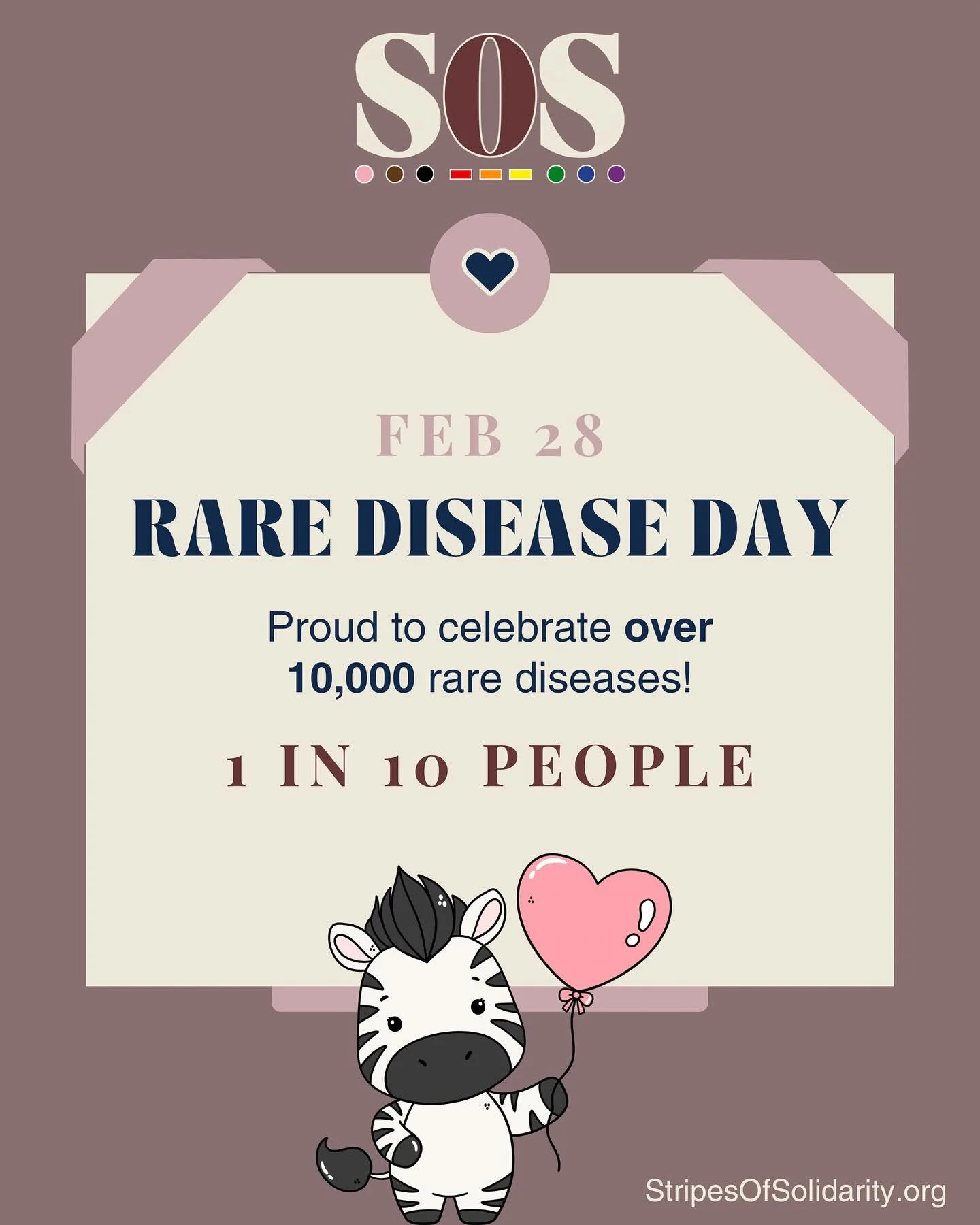
A rare disease is defined in the U.S. as one that affects fewer than 200,000 people. But with over 10,000 identified rare diseases, the collective impact is massive as more than 30 million Americans are living with a rare disease. Globally, that number reaches over 300 million people.


Quick Facts:

1 in 10 people in the U.S. has a rare disease.

Over 70% of rare diseases are genetic.

About 50% of those affected are children.

95% of rare diseases have no FDA-approved treatment.

The average diagnosis time is 5-7 years and often involves multiple misdiagnoses.


Why Are There So Few Treatments?

Due to the fact that each rare disease affects a relatively small number of people, pharmaceutical companies often don’t see a profitable return on investment. Developing treatments is expensive and with fewer patients, the financial incentives simply aren’t there without support. This is known as the “valley of death” in drug development.


This is where policy and regulatory incentives come in:


Orphan Drug Act (1983): Offers benefits like tax credits, FDA fee waivers, and 7 years of market exclusivity.


Accelerated Approval Pathways: Allow faster review of promising treatments.


Grants & Research Funding: Help fill gaps that private investment won’t cover.

Still, the road from discovery to access is long, especially for diseases that affect marginalized communities.


Rare Disease Is Not One Story, It’s Thousands

Behind every rare disease is a person. A family. A story. While the science is complex, so are the social inequities.


2SLGBTQIA+ Rare Disease Community:

Many 2SLGBTQIA+ individuals face bias or stigma in clinical settings, impacting diagnosis and care. Few rare disease clinical trials collect data on sexual orientation or gender identity, leading to invisibility in research.


BIPOC Communities:

Black, Indigenous, and other people of color are more likely to be undiagnosed or misdiagnosed, especially when symptoms don’t align with white-centric diagnostic models. BIPOC patients face lower clinical trial enrollment and reduced access to genetic testing and specialist care. For bone marrow transplants, Black and Brown patients have dramatically lower match rates, a life-threatening disparity.


Why Awareness & Action Matter

Progress in rare disease requires solidarity.


We need:

  • Inclusive research that reflects all communities.
  • Affirming healthcare providers who understand intersectionality.
  • Stronger policies to accelerate treatment development and access.
  • Public support to hold institutions accountable and bring urgency to invisible diseases.


Stripes of Solidarity exists to amplify these truths and build a world where rare disease patients, especially those from BIPOC and 2SLGBTQIA+ communities, aren’t left behind.


Join us in spreading awareness, driving change, and making rare disease advocacy as inclusive as it is powerful.


DISCLAIMER

Stripes of Solidarity is part of the personal brand and platform I’ve been building as a rare disease advocate, storyteller, and equity champion. Rooted in my lived experience as a Black, queer, young adult rare disease survivor, this space was created to center intersectionality, build community, and offer accessible, inclusive guidance across the rare disease world.


The goal of SOS is to be a supportive and complementary resource within the rare disease ecosystem, especially for those who may not see themselves reflected in existing efforts. While I deeply value and respect the work of many organizations in this space, this platform was developed independently and intentionally to uplift perspectives and priorities that are often overlooked.


It is not a nonprofit, and it is not affiliated with any one group. It is a growing, evolving space for connection, learning, and healing. Whether you are brand new to rare disease or a seasoned advocate or clinician, my hope is that Stripes of Solidarity serves as a trusted and human-centered guide to what this world is, and what it can become.


Nate Milam II

Founder, SOS

Memberships

Stripes of Solidarity is built on community by us, for us, with love, purpose, and pride. While we are not a 501(c)(3) nonprofit, we are a grassroots-led platform committed to transformative connection, advocacy, and truth-telling for 2SLGBTQIA+ rare disease communities.


We understand that different structures and systems can shape how collaboration happens. But we also know that true alignment and shared purpose often inspire people and organizations to find creative, value-driven ways to connect. We are deeply grateful to every organization that chooses to engage with us not out of obligation, but out of genuine belief in our mission and commitment to showing up with integrity.


These partnerships mean more than a badge. They represent trust, authenticity, and shared vision. We proudly recognize the Rare Disease Diversity Coalition (RDDC) as a shining example of what it means to show up with intention, action, and unapologetic support.


This is just the beginning. As we grow, we remain open to building with organizations that actively align with our mission and boldly stand in solidarity, not in theory, but in practice.


Thank you for seeing us, uplifting us, and walking with us.